

Are Ireland’s Farms the Next Clean Energy Powerhouses?
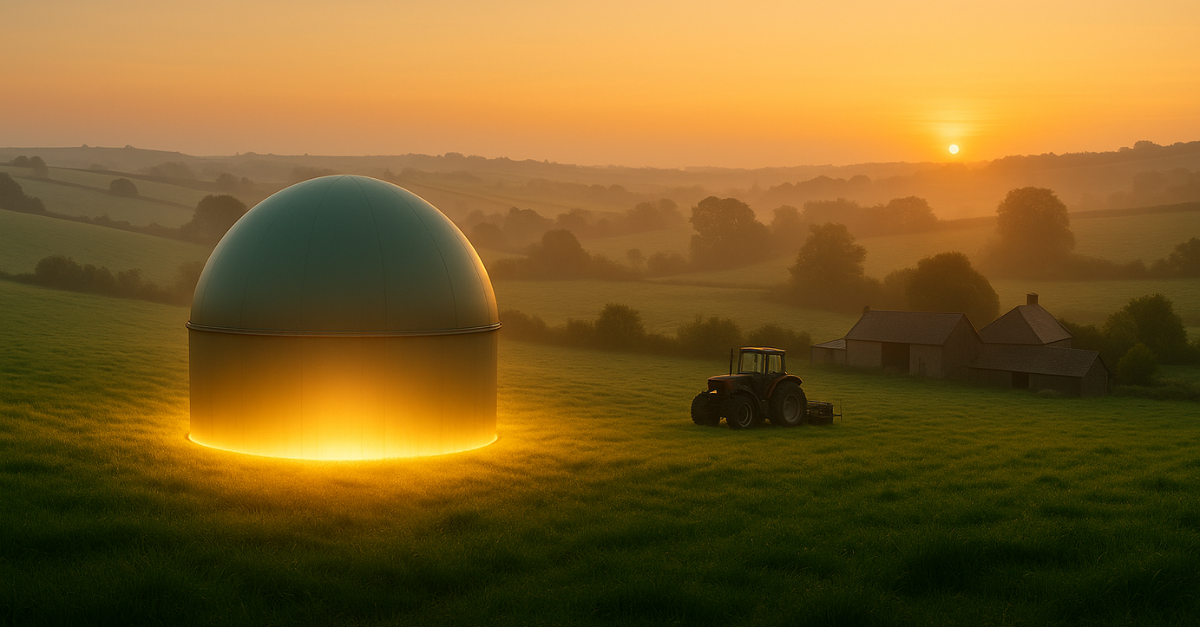
From slurry pits to silage, Ireland’s agricultural sector produces millions of tonnes of organic waste each year. Traditionally, that waste has been seen as a by-product of food production – but today, it’s being reimagined as a renewable resource.
Across Europe, agricultural waste is being transformed into biogas and biofuel, reducing carbon emissions and supporting national renewable-energy targets. For Ireland – a nation with both a strong farming tradition and ambitious sustainability goals – the potential is enormous.
According to the Sustainable Energy Authority of Ireland (SEAI), biogas derived from agricultural residues could supply up to 10% of Ireland’s energy needs if developed at scale.
And as the country pushes toward a net-zero future, farmers, energy companies and policymakers are beginning to take note.
If you’re curious about what happens to other types of waste once collected, check out our recent blog What Happens to Your Waste After Collection?
How Agricultural Waste Becomes Energy
At the heart of this revolution is anaerobic digestion (AD) – a process that breaks down organic material such as manure, slurry, or crop residues in oxygen-free tanks to produce biogas.
That gas, rich in methane, can then be:
- Burned to generate electricity and heat
- Upgraded into biomethane for gas grids or vehicle fuel
- Used as a renewable feedstock for chemical industries
The leftover digestate (a nutrient-rich by-product) can even be spread back on farmland as a low-carbon fertiliser. This completes a closed-loop cycle that exemplifies the circular economy in action.
Globally, countries like Denmark and Germany have proven how AD plants can power thousands of homes while cutting methane emissions from livestock waste.
In Ireland, the National Biomethane Strategy – part of the Climate Action Plan 2024 – aims to produce 5.7 terawatt hours (TWh) of renewable gas annually by 2030, largely from agricultural sources. That’s equivalent to removing over half a million fossil-fuel vehicles from Irish roads.
From Farm to Fuel: Real-World Progress
In Ireland, early adopters such as Green Generation in Co. Kildare are already demonstrating what’s possible. The company uses food and farm waste to generate biogas, which powers their operations and feeds electricity back into the grid.
But scaling this model nationwide will require:
- Investment in local biogas infrastructure
- Support for farmers to collect and transport waste efficiently
- Clear policy frameworks to encourage participation and ensure profitability
When achieved, this could help Ireland cut emissions, reduce waste, and strengthen energy independence – all while revitalising rural economies.
Ireland’s Agricultural Edge: Why It Makes Sense
Ireland’s agricultural landscape is uniquely positioned to benefit from the bioenergy revolution. The country’s rich grasslands, livestock farming systems, and year-round rainfall create an abundant supply of organic material suitable for energy conversion.
By turning waste into power, Ireland could:
- Reduce reliance on imported fossil fuels
- Provide additional income streams for farmers
- Cut agricultural methane emissions
- Contribute to national renewable-energy targets
Moreover, this transformation aligns with Ireland’s circular economy principles and sustainability ambitions outlined by the Department of the Environment, Climate and Communications (DECC).
For more insights into Ireland’s environmental targets and why recycling matters, see our article Why Recycling Matters: Ireland’s Waste Targets Explained.
The Challenges Ahead
While the potential is huge, itâ’s not without hurdles. A ScienceDirect study highlights several key challenges: high initial investment costs, limited access to localised collection networks, and regulatory uncertainty regarding grid injection of biomethane.
Additionally, not all farm waste is suitable for large-scale bioenergy production. Efficient feedstock management, emissions monitoring, and lifecycle analysis are essential to ensure the environmental benefits outweigh the costs.
Despite these challenges, technological advances – including modular digesters and AI-driven waste tracking systems – are making bioenergy more accessible and efficient than ever before.
A Cleaner, Greener Energy Future
Transforming agricultural waste into energy offers a vision of Ireland powered by its own land. AÂ nation where farms don’t just feed people but also fuel homes and transport.
It’s an example of circular thinking in action: turning waste into value, reducing emissions, and empowering rural communities to be part of the green transition.
And as sustainable energy innovation continues, every decision – from recycling to responsible waste management – helps build that future.
If you’re planning your next renovation or land-clearance project, you can contribute too. Choose responsible disposal with hireaskiponline.ie and ensure your waste supports Ireland’s cleaner tomorrow.
Summary
- Agricultural waste can be transformed into biogas and biofuel, cutting emissions and supporting renewable-energy targets.
- Ireland’s farming systems offer a strong foundation for this circular approach.
- Real-world projects across Europe show the economic and environmental potential.
- With investment and policy support, farm waste could become a cornerstone of Ireland’s green-energy future.
FAQs
Q: What types of agricultural waste can be used to make energy?
A: Common materials include manure, slurry, crop residues, silage, and even food processing waste – all can be digested to produce biogas.
Q: Is biogas really carbon neutral?
A: While it does release COâ‚‚ when burned, it’s considered renewable because it recycles existing carbon rather than adding new emissions from fossil fuels.
Q: How can Irish farmers get involved?
A: Through cooperatives or partnerships with bioenergy developers. Ireland’s National Biomethane Strategy provides incentives and guidance.
Q: What are the main benefits for Ireland?
A: Reduced emissions, energy independence, rural economic growth, and progress toward national renewable-energy goals.

