

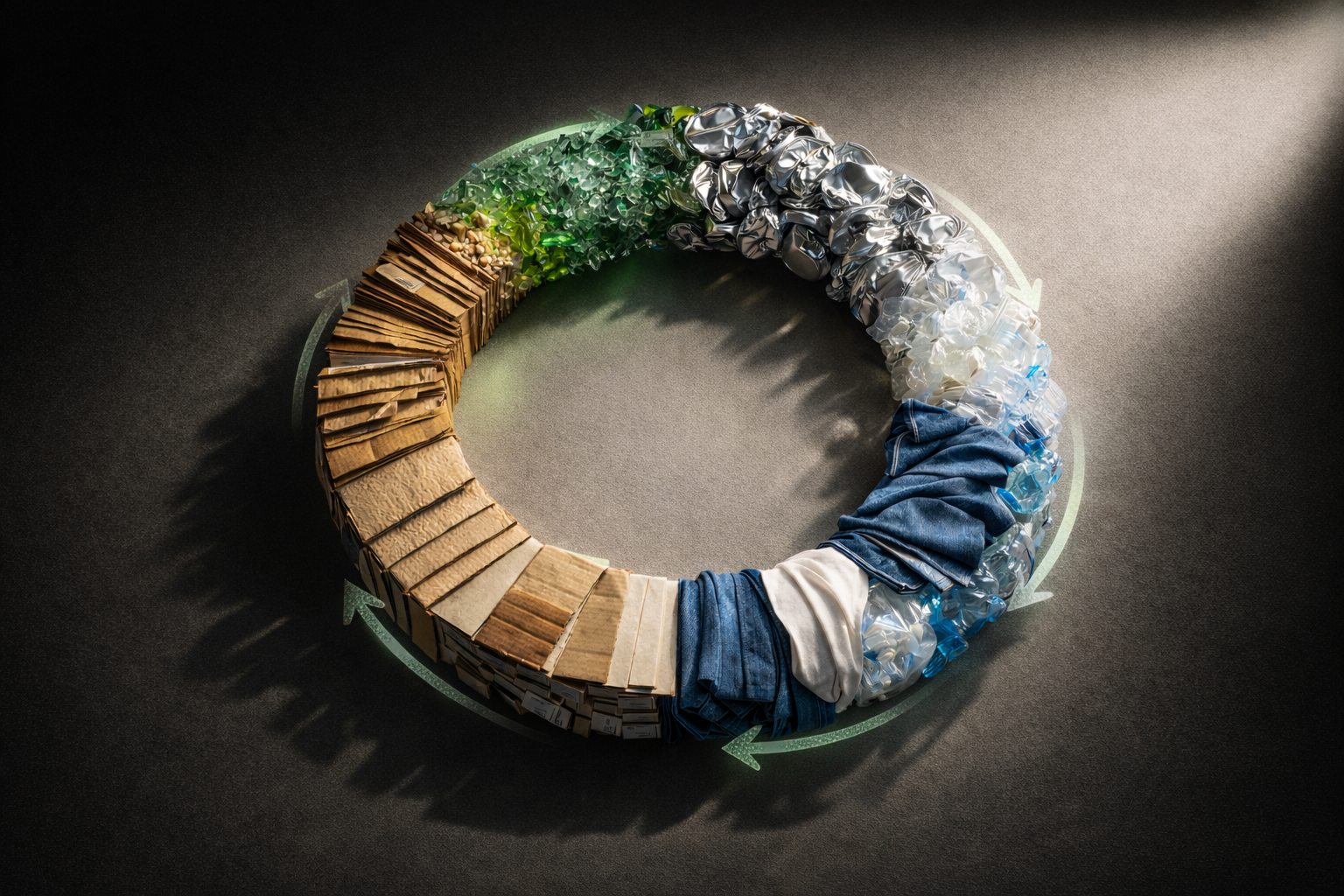
Ireland’s Government has launched a new Circular Economy Strategy 2026–2028 — a whole-of-government plan to accelerate Ireland’s transition from a linear “take-make-waste” economy to a circular, sustainable model. The strategy emphasises resource productivity, waste reduction and material reuse. It also sets out how businesses will need to adapt and the opportunities this shift creates.
This strategy is part of Ireland’s broader climate and economic agenda. It supports resilience, competitiveness, emissions reduction and innovation. Ahead, we explore the most significant aspects of the strategy and what they mean for Irish businesses of all sizes. And licensed, professional waste management companies like hireaskiponline.ie will have a significant role to play!
What’s New in Ireland’s Circular Economy Strategy?
The Circular Economy Strategy 2026–2028 was jointly launched by the Minister for Climate, Energy and the Environment and the Minister of State for the Circular Economy. It is designed as a cross-departmental framework to make circularity a core part of Ireland’s climate and industrial policy.
At its core, the strategy aims to:
- Increase resource efficiency and reduce reliance on virgin materials
- Raise Ireland’s circular material use rate towards 12% by 2030
- Embed circular approaches across priority sectors including construction, retail and agriculture
- Promote reuse, repair and product longevity
- Support business innovation and competitiveness
The strategy builds on existing policies, such as the Waste Action Plan for a Circular Economy and the Circular Economy Act 2022. It also aligns with EU regulations, such as Sustainable Products and Ecodesign requirements.
Why It Matters to Irish Business
For businesses, circular economy thinking changes how products are designed, used and recovered. The strategy highlights that nearly half of global greenhouse gas emissions stem from the way goods and materials are produced and consumed. Embedding circularity can therefore cut emissions and reduce operating costs.
Increasing resource efficiency can boost resilience. Materials shortages and volatile global markets have affected many sectors in recent years. Adopting circular principles can help companies re
duce exposure to these risks and enhance long-term competitiveness.
The strategy identifies key business opportunities such as:
- Incentives for repair and reuse operations
- Digital tracking of product lifecycles
- Reduced reliance on imported raw materials
- Job creation in circular value chains
- Innovation in product design and service models
Key Measures Affecting Business
-
Repair and Reuse Initiatives
A national pilot Repair Voucher Scheme will launch in 2027. The aim is to lower repair costs and encourage consumers and businesses to fix products rather than replace them. This could expand repair markets for electronics, textiles and appliances.
-
Digital Product Passports
Under the EU’s Ecodesign for Sustainable Products Regulation, Ireland will implement digital product passports. These will provide data on a product’s sustainability, compliance status, repairability and lifecycle impacts. Priority sectors include textiles, furniture and mattresses.
For businesses, this means heightened transparency. Companies will need to plan for data collection, reporting and compliance, especially where product durability and reuse are concerned.
-
Sector-Specific Roadmaps
The strategy sets out sector targets:
- Construction: Develop a circular roadmap and compact with industry to encourage reuse of building materials.
- Bioeconomy & Agriculture: National bioeconomy strategy and food waste reduction targets.
- Retail: Expanded initiatives for repair and reuse models.
- Packaging & Plastics: Implementation of EU packaging rules aimed at reducing waste and boosting bottle collection rates by 2029.
- Electronics & Textiles: Expanded repair and remanufacturing programmes.
These measures represent both regulatory expectations and opportunities for innovation. For more on Ireland’s waste targets, take a look at our article: Why Recycling Matters: Ireland’s Waste Targets Explained.
Business Advantages and Challenges
Opportunities
- Circular practices can cut costs by reducing waste and material use.
- New service business models may emerge, such as refurbishment, parts resale, product leasing and resource recovery.
- Early adoption could position companies as sustainable market leaders.
For example, contractors working with materials reuse or recyclers can bring economic and environmental value to clients. Efficient waste strategies also align with the aims of articles such as What Happens to Your Waste After Collection?, which explains how sorted materials can become secondary resources rather than landfill inputs.
Challenges
Implementing circular principles requires investment in systems and training. Businesses must also prepare for:
- Increased reporting and compliance requirements
- Enhanced product data tracking
- Collaboration with suppliers and customers
Smaller enterprises may need support to meet these expectations, though government programmes and grants could help offset costs.
Practical Steps for Irish Businesses
Business leaders can start preparing now by taking practical steps:
- Audit Material Flows
Identify where materials are used, wasted or sent for disposal. This baseline is essential for resource planning. - Design for Longevity
Consider how products can be repaired, reused or recycled at the design stage. - Engage with Circular Networks
Participate in reuse hubs, repair networks and industry engagements to exchange best practice and resources. - Educate Teams and Customers
Internal training and clear customer communication on repair, reuse and recycling can support behaviour change. - Plan Waste Strategically
For larger sites or projects, consider scheduled waste services, such as skip hire, to manage materials efficiently and responsibly. Booking skip hire through HireASkipOnline.ie helps businesses keep waste segregation legal and compliant with current regulations.
Summary
Ireland’s Circular Economy Strategy 2026–2028 is a landmark policy that places circularity at the centre of national climate and industrial plans. It aims to boost reuse, decrease material waste and enhance sustainability across sectors. For businesses, the strategy offers both opportunities and obligations as circular principles become embedded into how products are made, sold and returned to value chains.
The shift is not just environmental. It is economic. Circular business models can reduce costs, build resilience, and support innovation while aligning with national and EU climate goals.
FAQs
Q: What is Ireland’s Circular Economy Strategy 2026–2028?
A: It’s a whole-of-government plan to transition Ireland from a linear to a circular economy by improving resource use and waste reduction.
Q: How will it affect businesses?
A: Businesses will face new transparency requirements, reporting, design standards, and potential incentives in repair and reuse sectors.
Q: Are there specific targets companies must meet?
A: The strategy includes broad sector targets, such as boosting circular material use and aligning with EU ecodesign rules, but regulations may follow.
Q: What is the Repair Voucher Scheme?
A: A national pilot programme planned for 2027 providing financial incentives to repair products rather than replace them.
Q: How do skip hire services fit in?
A: Skip hire can support circular operations by enabling organised, compliant waste management and material segregation on sites and projects. Booking through HireASkipOnline.ie ensures professional handling.

