

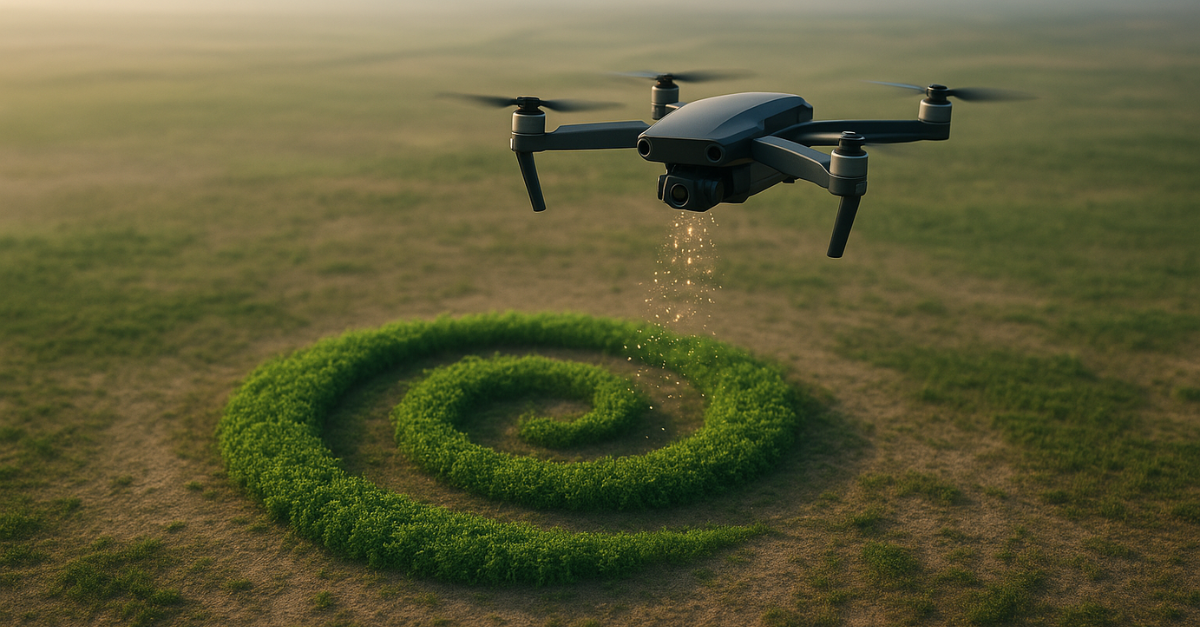
As climate change intensifies and biodiversity continues to decline, the restoration of damaged ecosystems has become an existential priority. One of the most exciting developments in this space is the use of drone technology to accelerate rewilding, habitat restoration and reforestation efforts. In this article, we’ll explore how drones are being used at scale, why they matter for both remote and accessible land, and what the implications are – including potential applications here in Ireland.
For more on sustainable waste practices and Ireland’s waste targets, see our insights on why recycling matters.
The Rise of Drone-Powered Rewilding
Traditionally, restoring forests or damaged land has been slow, labour-intensive and costly. Planting saplings by hand, manual ground preparation, and limited site access often hamper progress. Enter drones: they offer the ability to quickly seed, map and monitor large or inaccessible areas with ever-improving precision.
For example, a 2025 trial by the UK-based charity Woodland Trust in Cornwall and Devon used drones to scatter 75,000 native tree seeds in just one morning on otherwise difficult terrain. Similarly, on Scotland’s west coast at the Dubh Allt estate, drones were used to seed degraded moorland and germination results exceeded expectations.
These emerging case studies demonstrate the growing viability of drone-assisted seeding, offering faster, cost-effective restoration where conventional methods struggle.
At HireASkipOnline, we’re committed to the environment and sustainable waste management practices. Learn how you can do your bit in reducing waste in our article: The Hierarchy of Waste.
How Rewilding with Drones Works
Mapping & Site Assessment
Drones equipped with multispectral sensors can survey land, assess soil quality, moisture levels, and even detect degraded terrain long before planting begins. In Ireland, companies such as Aerial AG Ireland already use drones for forestry mapping and soil/erosion control.
Seed-Dispersal & Planting
Modern drones can carry seed pods, scatter them precisely, and cover terrain that would challenge human labour. According to Mast Reforestation and Flash Forest, drone methods can plant 1,000-2,000 trees per hectare.
Monitoring & Maintenance
After seeding, drones can help monitor growth rates, track survival of seedlings, and assess ecosystem health via metrics like NDVI/NDRE (Normalized Difference Vegetation Index / Red-Edge Index). This enables adaptive management of rewilding sites.
Why This Matters for Ireland
While many high-profile drone rewilding projects have taken place in the UK, Canada, and Brazil, the technology has enormous potential for Ireland’s own landscapes. Across the country, vast areas of peatlands, uplands, and marginal farmland are in need of ecological restoration after decades of intensive use, drainage, and deforestation.
According to Rewilding Magazine, Ireland’s biodiversity has declined sharply in recent decades, with native woodland cover among the lowest in Europe. Drone-assisted rewilding could help reverse this trend, accelerating the recovery of native forests and restoring crucial habitats for wildlife such as birds, pollinators, and small mammals.
Rewilding through drones could:
- Support carbon capture and climate resilience by re-establishing native tree cover on degraded land.
- Revive peatlands and wetlands, which act as powerful natural carbon sinks and flood defences.
- Enhance biodiversity corridors, connecting fragmented ecosystems across rural and semi-urban areas.
- Boost local economies, as rewilding often brings eco-tourism, conservation jobs, and sustainable land-management opportunities.
Crucially, this technology makes it possible to restore hard-to-reach or previously unusable areas – from remote boglands to post-industrial sites – with minimal disruption and lower costs. As Ireland continues to pursue its climate and biodiversity targets under the National Biodiversity Action Plan, drone-powered rewilding could become a valuable tool in our transition to a greener future.
At hireaskiponline.ie, we believe that responsible land management begins with proper waste removal and ends with meaningful regeneration. When you hire a skip with us and choose responsible clearance, you’re not just removing waste – you’re helping prepare land-spaces for the future.
Practical Considerations, Challenges & the Business Case
Cost vs Efficiency
Though drone-seeding is faster and can access more challenging terrain, initial costs, regulatory frameworks (aviation, seed sourcing), and seed-survival rates remain hurdles. For example, the Scottish Dubh Allt project recorded a 2.7% germination rate in the first instance – higher than hoped but still early days.
Seed Supply & Biodiversity
Large-scale rewilding requires native seedbanks, ecological expertise and continuous monitoring. Without the right species mix and site preparation, survival rates may suffer. Some drone-based firms emphasise the need for soil-preparation and local knowledge.
Integration with Waste & Land Clearance
For companies involved in skip-hire, land-clearance, construction or site remediation, aligning waste removal with restoration creates a compelling narrative. Clearing contaminated land, removing obsolete structures and then enabling rewilding via drone-seeding is a circular approach.
Regulatory & Ethical Dimensions
Drone operations must comply with aviation regulations, land-use planning and environmental policy. In Ireland and the UK, many trials engage with government or university partners to validate methods and monitor impacts.
Summary
Drone technology is transforming how we approach rewilding, ecosystem restoration and land-recovery. From mapping remote terrain to dispersing native seed and monitoring growth, it enables the scale and speed required for meaningful impact. For Ireland – and for professionals in construction, waste management and land-clearance – it presents a unique opportunity to integrate responsible waste practices, restoration and sustainability.
Play your part in a greener future. Book your skip online today with HireASkipOnline.
FAQs
Q: Can drones really replace traditional tree-planting?
A: Not entirely – but they significantly augment planting efforts, especially in hard-to-reach areas. For example, some drone projects plant thousands of seed pods per hectare in a fraction of the time.
Q: Is drone-seeding already used in Ireland?
A: While large scale Irish trials are less documented, Irish technology firms (e.g., Aerial AG Ireland) use drones in forestry and restoration contexts, and broader UK/Scottish trials suggest the model is transferable.
Q: How does waste removal tie in with rewilding efforts?
: Proper skip hire and waste removal ensures waste is removed responsibly from sites that may later be prepared for restoration. Cleaning up land is often the first step toward rewilding and re-use.
Q: What should construction or waste professionals consider?
A: Focus on legally compliant clearance, collaborate with restoration specialists, and explore how drone technology or restoration credentials can enhance your green value-proposition.

