

The future of waste management isn’t just cleaner—it’s smarter. In cities like Dublin, new technologies are transforming ordinary bins into connected devices that monitor fill levels, compress waste, and even host public Wi-Fi. This revolution is helping councils reduce collection times, cut costs, and make streets more hygienic. Let’s explore how IoT is changing the way cities manage waste.
At HireASkipOnline, we’re committed to responsible waste disposal. By using our licensed professionals, you can help Ireland take a step closer to her waste targets. Book your skip online today!
What Are Smart Bins and How Do They Work?
At the core of this transformation are IoT-enabled smart bins—waste containers fitted with sensors and powered by solar panels or long-life batteries. These sensors monitor fill levels, compact waste to boost capacity (by as much as 5–8 times), and send real-time alerts when they’re full or obstructed.
These bins connect wirelessly to centralized dashboards, where waste collection teams can monitor multiple units simultaneously and optimise emptying schedules. Tools like machine learning enhance this by forecasting future fill patterns, enabling even smarter routing.
With Irish Business Against Litter (IBAL) ranking Dublin as the dirtiest urban area in Ireland, hopefully smart waste technology will help turn this around.
Read more about what happens to your waste after collection in our article here.
Real-World Examples in Ireland
1. Dublin Docklands by Smart Docklands and Big Belly
Dublin has led the charge with its Smart Bin Innovation Project, deploying 110 Big Belly smart bins with solar compaction and real-time monitoring across the Docklands. These bins send fill-level data to management teams, helping reduce collection frequency by up to 85%, deter pests, and even host local Wi-Fi and advertising.
2. Dún Laoghaire–Rathdown County Council
Over 400 self-compacting, Wi-Fi enabled solar smart bins are transforming areas like Dún Laoghaire, sending email alerts to the relevant waste management authority when they approach 85% full, significantly increasing bin capacity and optimising waste collection.
3. Dublin Airport with Ecube Labs
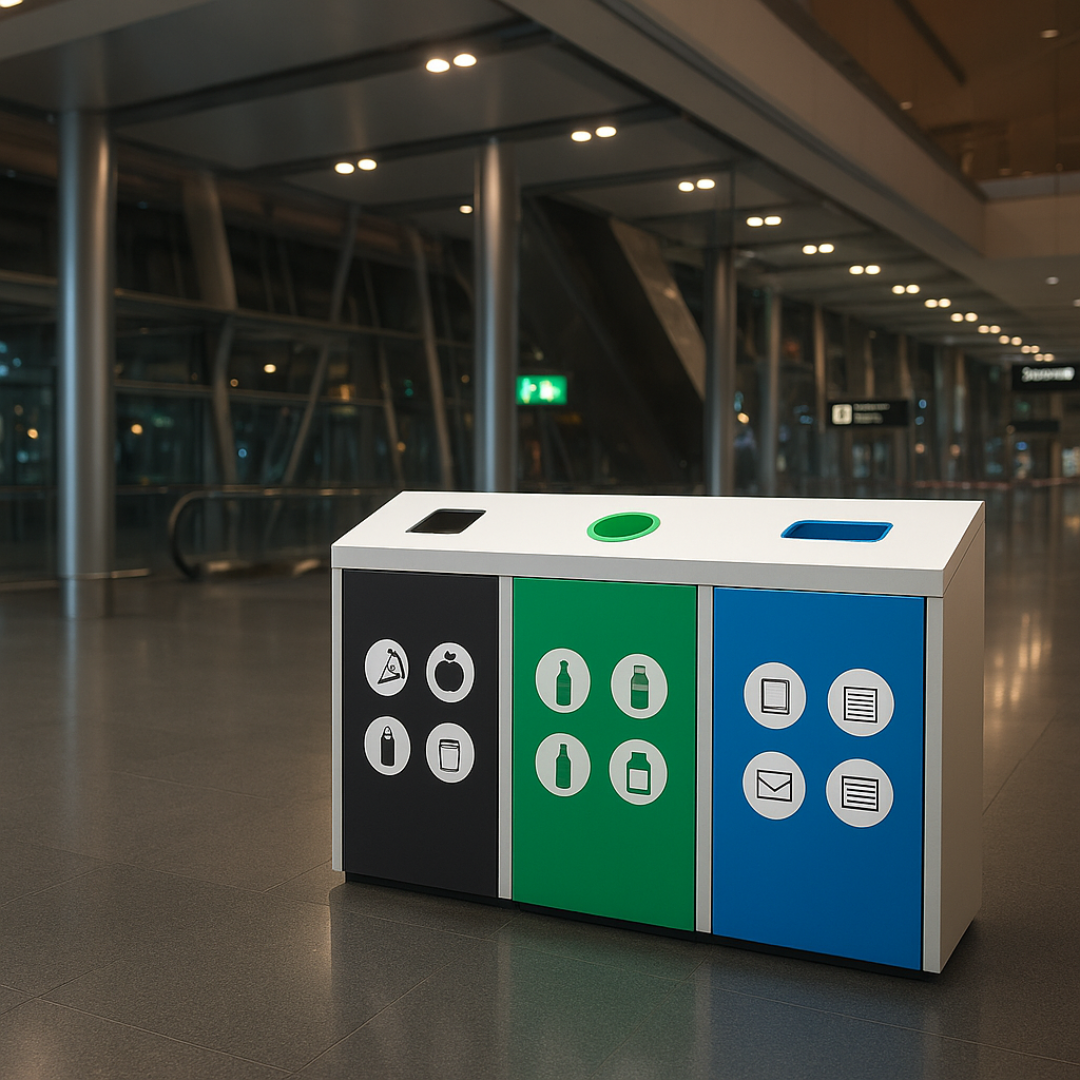
At Dublin Airport, 840 traditional bins were replaced with 80 triple-station smart units equipped with 300 IoT sensors. And according to Ecube Labs, this led to a 92.8% reduction in collections, enabling better resource allocation and smoother operations.
Why Smart Bins Matter: Key Benefits
- Operational Efficiency: Fewer empty trips reduce fuel use, labour costs, and traffic disruption.
- Environmental Gains: Reduced carbon footprint, cleaner streets, and better pest control.
- Scalability and Extras:Smart bins can host Wi-Fi, environmental sensors, telecom hardware, or serve adverts.
- Data-Driven Planning: Real-time and predictive analytics improve route optimization, forecasting, and staffing decisions.
Challenges and What’s Next
While promising, smart bin systems face challenges:
- Initial Costs & Integration: Higher upfront investment and integration with existing systems can be barriers.
- Connectivity: Effective performance depends on reliable, widespread wireless networks.
- Stakeholder Buy-In: Local authorities must coordinate well with service providers to execute these initiatives.
- Privacy & Maintenance: While generally low-risk, concerns around data integrity and long-term maintenance remain.
Potential future developments include integrating AI-based waste segregation, expanding public services via hosting platforms, and scaling city-wide smart waste networks.
Perhaps the future might even include Smart Skips!
Why Smart Bins Are Transforming Waste
Smart bin technology—through real-time monitoring, compaction, and data analytics—is reshaping waste management in Ireland. With real deployments in Dublin’s city centre, residential zones, and airport environments, these systems are cutting costs, improving efficiency, and keeping urban spaces cleaner. Though challenges remain, cities that adopt the technology stand to benefit significantly.
As a waste management company, it’s our job to stay informed about these innovations so we can help serve you better! Visit our website at https://hireaskiponline.ie/ for more articles like this!
FAQs
Q: What is smart waste management and why does it matter?
It involves using IoT-connected bins to monitor waste levels, compact garbage, and optimise collection, reducing costs and environmental impact.
Q: Are smart bins widely adopted in Ireland?
Yes – smart bins are already deployed in Dublin Docklands, Dún Laoghaire–Rathdown County Council, and Dublin Airport, delivering proven efficiency gains.
Q: How much waste can smart bins hold compared to traditional bins?
Solar-powered smart compactors can increase capacity by up to 5 – 8 times over standard bins.
Q: Can predictive analytics improve waste routing?
Absolutely. Machine learning models help forecast when bins will fill and streamline collection schedules accordingly.

