

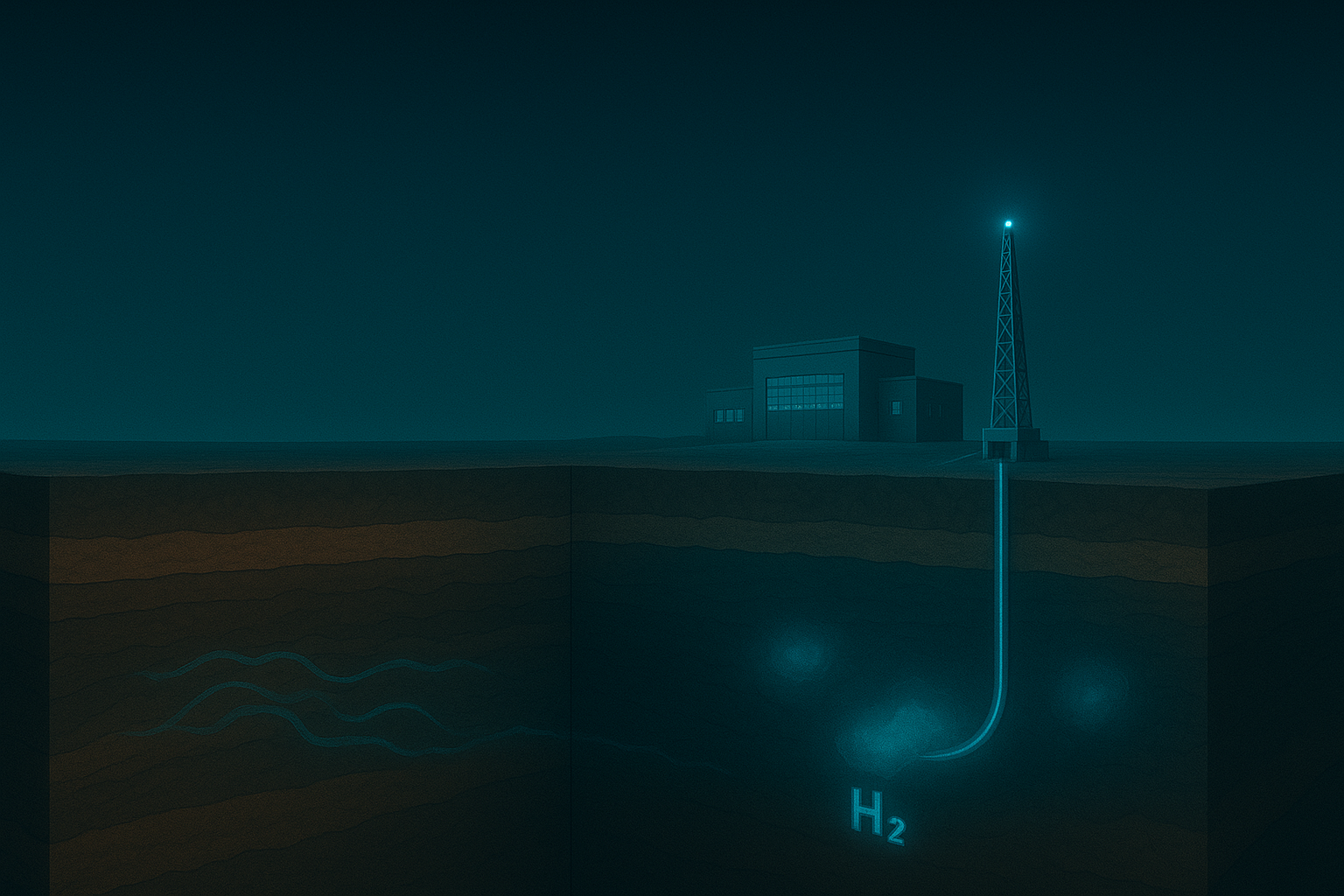
 Hydrogen has long been viewed as a clean fuel when made via renewable electricity (“green hydrogen”). But recent discoveries in France, Albania, Turkey and more suggest that vast natural hydrogen reservoirs – underground stores of hydrogen generated by geological processes – could offer a clean, sustainable energy source without much of the cost or emissions normally associated with hydrogen production. This emerging technology has big implications for climate change, waste, and how we power the future.
At HireASkipOnline, we’re committed to helping Ireland reach it’s waste targets – that’s why we only ever use licensed professionals to dispose of your waste according to Irish regulations. Read more about Why Recycling Matter’s and Ireland’s Waste Targets in our article here.
What Is Natural Hydrogen?
- Natural (or geologic) hydrogen is hydrogen gas (H) that forms via natural geological processes – no electrolysis required. Sources include reactions of water with iron-rich minerals (serpentinisation), radioactive decay in certain rocks and other chemical interactions underground.
- Key geological elements for natural hydrogen include:
- A source rock or mineral capable of producing hydrogen.
- Permeable reservoir rocks where hydrogen can collect.
- Overlying seals or geological traps to keep the gas from dissipating.
Why It’s a Potential Game-Changer
- Reduced carbon footprint: Traditional hydrogen production (e.g. from natural gas or via electrolysis powered by fossil fuels) often has a large CO2 cost. However, according to a study published by the Yale School of Environment, natural hydrogen, when extracted properly, can bypass much of that.
- Scale & supply: Some studies suggest that enough natural hydrogen exists underground to meet global hydrogen demand for dozens to hundreds of years, if even a small fraction can be accessed.
- Energy security & waste synergy: Natural hydrogen could be deployed in areas that already deal with waste and industrial processes (for heating, power, or even waste-to-energy infrastructure). It offers a potential clean energy vector for sectors that are hard to electrify.
For more information on The Future of Waste, take a look at our article: AI Generated Waste: The Hidden Environmental Cost of Digital Technology.
Challenges & Limitations
- Detection & assessment: Many hydrogen finds have been incidental. Systematic exploration is needed with better geological modelling. The U.S Geological Survey reports that it’s not yet clear how many of the reservoirs will be economically viable.
- Leakage and purity: Natural hydrogen may be mixed with other gases (e.g. methane, CO2) and requires purification. Similarly, hydrogen is a very light gas: so, there are concerns of sealing and containment.
- Infrastructure & transport: If the reservoirs are remote, or in difficult geology, transporting hydrogen to where it’s needed could be expensive. Also, many uses of hydrogen (fuel cells, industrial heating) still require investment in new infrastructure.
What Natural Hydrogen Means for Waste & Clean Tech
- Waste management and recycling infrastructure could leverage natural hydrogen to reduce reliance on fossil fuel sources. For instance, hydrogen can be used in zero-carbon industrial heat (where waste plants often rely on high-temperature fossil fuels).
- New hydrogen discoveries might shift policy and investment. Regulations related to waste & emissions may begin to treat hydrogen more centrally in climate strategy.
- Waste testing, and soil / material testing services may see new applications: checking that geological sites or contaminated sites are suitable (e.g. no interfering contaminants), assessing safety, ensuring no rogue leakages, etc.
Summary
Natural hydrogen reservoirs represent an exciting frontier in clean energy: hydrogen produced underground could enable lower carbon emissions, reduce reliance on manufacturing hydrogen via energy-intensive processes, and support sectors that are hard to electrify. However, significant technical, economic, and logistical challenges remain.
FAQs
Q: Is natural hydrogen the same as green hydrogen?
Not exactly. Green hydrogen is typically produced by splitting water using renewable electricity (electrolysis). Natural hydrogen is already present underground, formed by natural geologic processes. It may still need purification or compression.
Q: Can natural hydrogen be considered renewable?
In many contexts, yes. Some natural hydrogen appears to be generated continuously or frequently enough that it could be tapped sustainably. But for many reserves, the rate of generation, leakage, and regeneration are still under study.
Q: Is it safe to extract hydrogen underground?
As with any subsurface energy resource, there are risks: contamination, leakage, and effects on nearby geological formations. Proper geological surveys, material testing, and environmental assessments are essential.
Q: When might natural hydrogen be widely used?
Experts vary, but ongoing projects are in exploratory stages now (France, Mali, Australia, U.S.). Depending on investment, regulation, and technological progress, it could take 10-20 years to scale meaningfully.

