

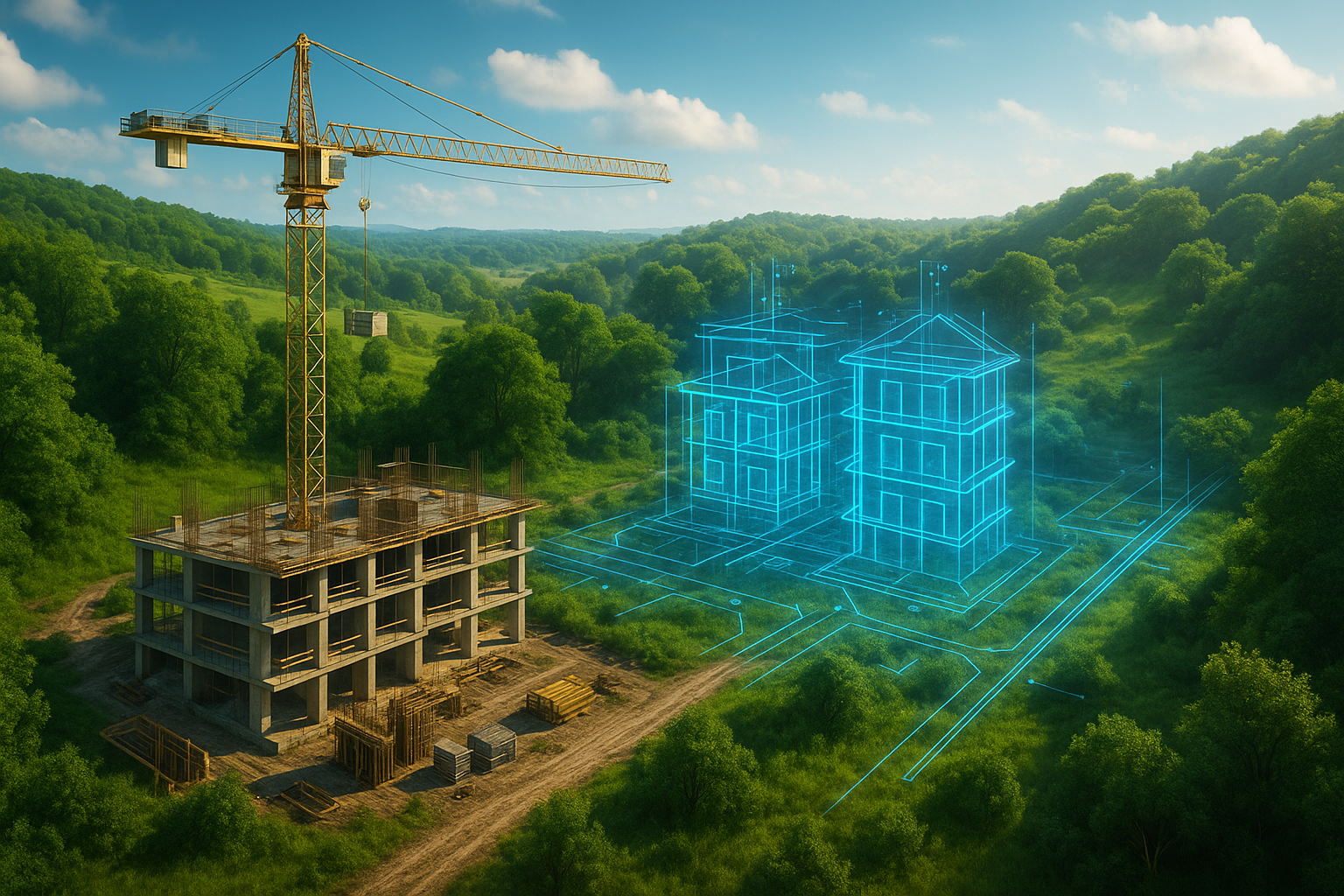
 A New Blueprint for the Built Environment
Concrete has been the backbone of modern civilisation – shaping skylines, bridges, and homes for over a century. Yet, it’s also one of the world’s most carbon-intensive materials, responsible for roughly 8% of global CO2 emissions (Chatham House). As industries race to meet climate targets, the question isn’t if we can replace traditional concrete, but how soon we can transition to greener alternatives.
Forward-thinking construction companies, policymakers, and innovators are now reimagining the very foundations of the built environment. This shift goes beyond sustainability; it represents a complete re-engineering of how we design, source, and dispose of materials.
(Learn more about sustainable waste management practices in our guide: The Hierarchy of Waste.)
Why Traditional Concrete Is Under Pressure
Concrete’s environmental cost stems largely from its key ingredient – cement. The process of making cement releases massive amounts of carbon dioxide due to both the energy required and the chemical reactions involved.
With the global construction sector expected to grow by 42% by 2030, the urgency to decarbonise is intensifying. Governments and corporations alike are investing in research to develop low-carbon or carbon-negative materials that could replace or supplement concrete.
According to the ClimateWorks Foundation, three emerging technologies – carbon-mineralised cement, bio-based binders, and recycled aggregates – are among the most promising. Each offers unique advantages in reducing emissions and enhancing circularity.
The Rise of Bio-Materials: Living, Breathing Alternatives
Imagine a building that repairs itself or a bridge that literally grows stronger with time. This isn’t science fiction – it’s bio-innovation in construction. Researchers at NorthWestern University recently unveiled a carbon-negative material capable of storing more CO2‚ than it emits during production.
Even more radical are fungus- and bacteria-based concretes, which use organic matter as structural components. As reported by BGR, scientists have created materials derived from mycelium – the root network of fungi – that are both ultra-hard and fully biodegradable.
These living materials not only reduce waste but may one day enable buildings that “heal” themselves after minor cracks or environmental damage. In essence, construction materials could soon evolve from inert substances to active participants in environmental restoration.
Circular Construction: Designing for Regeneration
The shift toward eco-alternatives is part of a broader movement toward circular construction, where materials are designed for reuse, recyclability, and minimal waste. From modular designs that simplify deconstruction to on-site recycling systems, the focus is shifting from “build and discard” to “build, use, and regenerate”.
This circular approach aligns perfectly with the mission of organisations driving better waste practices in Ireland. Through platforms like Hire A Skip Online, construction professionals can manage waste responsibly – ensuring recyclable components are separated, repurposed, or processed sustainably by licensed professionals.
These small decisions collectively build a foundation for large-scale change.
Technology, Policy, and Purpose: The Road Ahead
Eco-alternatives to concrete won’t succeed on science alone. Collaboration across sectors – from tech start-ups and construction firms to policymakers and waste management providers – will be essential.
Public-private partnerships are already driving pilot projects in carbon-negative materials and alternative binders. Meanwhile, digital tools such as AI-assisted design and material tracking systems are helping to optimise supply chains and minimise waste.
The future of construction lies not only in innovative materials but in a mindset shift – from efficiency to regeneration.
If your organisation is preparing for a greener future in construction, start by revisiting your waste and recycling systems. At HireASkipOnline, we offer nationwide services in Ireland, designed to make skip hire and waste removal simple, transparent, and fully compliant.
Summary
The construction industry is at a pivotal crossroads. From bio-engineered concretes to carbon-storing materials, innovation is transforming how we think about buildings and infrastructure. The companies that adapt early – embracing sustainability as a driver of value – will lead the next era of growth and the future of construction.
By combining circular practices, responsible waste management, and technological innovation, we can build not just stronger cities – but a stronger planet.
FAQs
1. What is the most promising alternative to traditional concrete?
Currently, carbon-negative cement blends and mycelium-based materials show significant potential, both in reducing emissions and enhancing performance.
2. Are eco-concretes as strong as regular concrete?
Many emerging materials already match or exceed conventional strength benchmarks, though large-scale testing and certification are still ongoing.
3. How can construction firms get started with sustainability?
A good first step is assessing waste streams, recycling options, and compliance – services supported by Hire a Skip Online and other sustainability-focused providers.
4. What’s next for green construction?
Expect greater integration of AI, 3D printing, and biomaterials, as well as stronger policy support for carbon-neutral building codes.

