

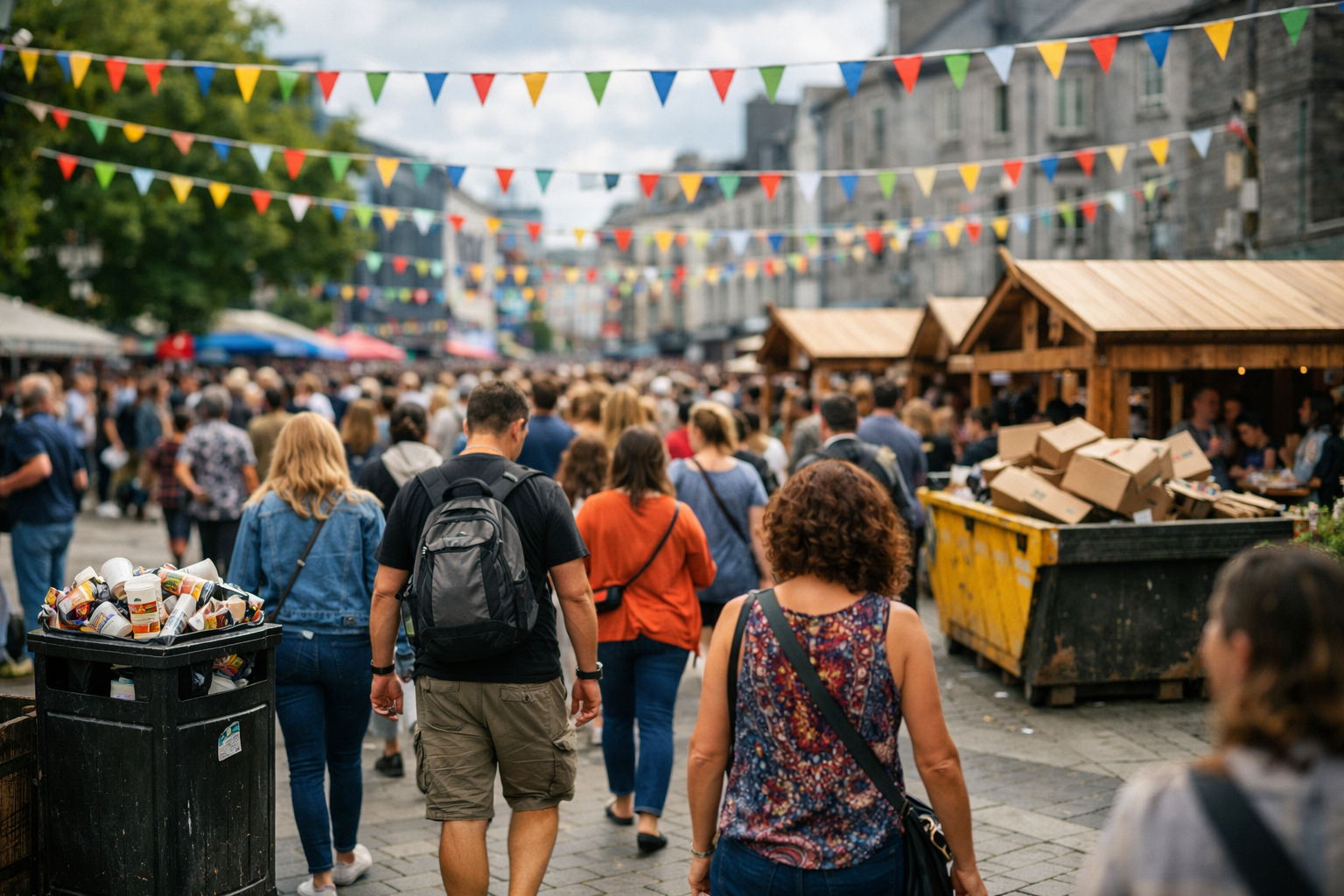
 Galway thrives on its festivals. Every summer and autumn, crowds fill Eyre Square, spill down Shop Street, and gather along Quay Street in the heart of the Latin Quarter. Visitors line up outside The Quays and Tig Coili. Traffic builds along Forster Street and Headford Road. The atmosphere is electric.
Yet behind the music and colour lies a quieter challenge. Festival season also brings a temporary surge in waste.
For event organisers and local businesses, responsible planning matters. Many now turn to structured waste solutions, including commercial skip hire, to manage peak demand. Services such as HireASkipOnline.ie’s Galway skip hire options help organisers plan ahead rather than react once bins overflow.
The Economic Importance of Festivals in Galway
Festivals drive significant tourism across Ireland. According to Fáilte Ireland, festivals and events support regional economies by increasing visitor spend and overnight stays. Galway’s calendar reflects this national pattern.
Major annual events include:
- Galway International Arts Festival
- Galway Races
- Galway International Oyster Festival
- Christmas Market in Eyre Square
Discover Ireland highlights Galway as one of Ireland’s leading festival destinations. Increased footfall supports hotels, pubs, restaurants, and local suppliers.
However, more visitors mean more consumption. More consumption means more waste.
The Hidden Waste Surge
Festival waste rarely makes headlines. Yet research shows that large-scale events generate significant volumes of food packaging, disposable drink containers, and staging materials. The University of Manchester’s Sustainable Futures platform notes that festivals often produce high levels of single-use plastics and mixed waste unless carefully managed (University of Manchester, Reducing Festival Waste).
In Galway, footfall intensifies around:
- Spanish Arch
- The cobbled lanes of the Latin Quarter
- Dominick Street
- Salthill Promenade
- The Claddagh shoreline
Pop-up food vendors increase takeaway packaging. Temporary bars expand capacity. Outdoor seating grows during dry weather. Public bins fill quickly.
Event waste commonly includes:
- Disposable cups and food trays
- Cardboard packaging
- Plastic wrapping
- Broken pallets or staging timber
- Mixed general waste
If collection schedules do not match demand, overflow becomes visible. This increases pressure on Galway City Council’s cleansing teams.
Guidance from waste management specialists emphasises that early waste planning reduces these pressures, take a look at the Festival Waste Guide publish by WasteManaged.
Environmental Pressures in a Coastal City
Galway sits beside the Atlantic. Wind and rain can carry litter from streets toward waterways.
The Environmental Protection Agency (EPA) notes that mismanaged waste contributes to litter and can enter aquatic environments if not properly contained. Stormwater runoff may transport lightweight materials into drains and rivers.
Areas near Spanish Arch and the Corrib estuary face particular exposure during heavy rain. Along Salthill Promenade, strong coastal winds can scatter unsecured waste. Even short-term spikes matter in sensitive marine environments.
Urban litter also affects perception. The Irish Business Against Litter (IBAL) reports regularly assess cleanliness in Irish towns and cities. Clean streets influence tourism and civic pride. Festival organisers must therefore balance vibrancy with responsibility.
Street-Level Reality During Peak Events
During the Galway International Arts Festival, crowds move between venues near Eyre Square, Dominick Street, and Quay Street. During the Galway Races, transport corridors fill as visitors travel between Ballybrit Racecourse and the city centre.
The Christmas Market transforms Eyre Square with wooden chalets and food stalls. The Oyster Festival attracts seafood lovers to the city’s pubs and restaurants.
These events generate temporary, concentrated waste streams. Public litter bins were not designed for sustained peak loads. Without supplemental collection, pressure builds quickly.
Practical Waste Solutions for Event Season
Effective waste management requires planning, not reaction.
Research from the University of Manchester highlights the importance of:
- Pre-event waste audits
- Clear segregation systems
- On-site recycling stations
- Vendor education
- Post-event clean-up strategies
Event organisers can also schedule temporary waste infrastructure. Commercial skips placed discreetly behind venues or along service lanes provide secure, high-capacity storage. This reduces reliance on street bins alone.
For businesses along Shop Street or near The Quays, short-term skip hire can manage increased packaging waste. Restaurants expanding outdoor seating during festival weeks often see higher cardboard and food waste volumes.
HireASkipOnline.ie offers commercial skip hire options designed for businesses and event planners. Early booking ensures capacity during peak tourism periods.
Skip hire becomes more practical when:
- Waste volumes exceed standard bin capacity
- Renovations coincide with event season
- Multiple vendors share limited back-of-house space
- Clean-up crews need centralised collection points
Structured waste removal also reduces the risk of illegal dumping in quieter residential areas such as The Claddagh or along back roads near Headford Road.
Shared Responsibility in a Growing City
Waste responsibility does not sit with one group alone.
Galway City Council manages public spaces. Event organisers coordinate vendor compliance. Businesses manage their own waste streams. Visitors play a role through responsible disposal.
According to the EPA, Ireland’s national waste policy emphasises prevention, reuse, and recycling before disposal. Festivals offer an opportunity to model these principles at scale.
Clear signage, segregated bins, vendor agreements, and scheduled collections all contribute to cleaner outcomes.
Why Planning Ahead Matters
Festival waste is predictable. Dates are fixed. Visitor numbers are anticipated. The surge is seasonal, not random.
Planning ahead reduces:
- Overflowing bins
- Street litter accumulation
- Emergency collection costs
- Environmental risks
Professional waste scheduling provides certainty. It allows organisers to focus on the event experience rather than last-minute clean-ups.
For Galway’s businesses and event teams, structured solutions such as Galway skip hire services offer one practical layer within a broader sustainability plan.
Summary
Galway’s festivals bring culture, tourism, and economic benefit. They also create temporary waste surges. Increased footfall in areas like Eyre Square and the Latin Quarter strains public bins. Coastal exposure raises environmental risks. Careful planning, segregation, and commercial skip hire support cleaner, more sustainable events.
FAQs
How much waste do festivals generate?
Waste volumes vary by event size. Research shows festivals often generate significant single-use packaging unless managed carefully.
Who is responsible for event waste in Galway?
Responsibility is shared between event organisers, vendors, waste contractors, and Galway City Council.
Can event organisers hire skips in Galway?
Yes. Commercial skip hire services operate across Galway to support businesses and event planners during peak periods.
What happens to waste collected after festivals?
Waste is transported to licensed facilities for sorting, recycling, recovery, or disposal under Irish waste regulations (EPA Ireland).
How can businesses in the Latin Quarter manage waste during peak season?
They can schedule increased collections, improve segregation, and use temporary skip hire when volumes exceed normal capacity.

