

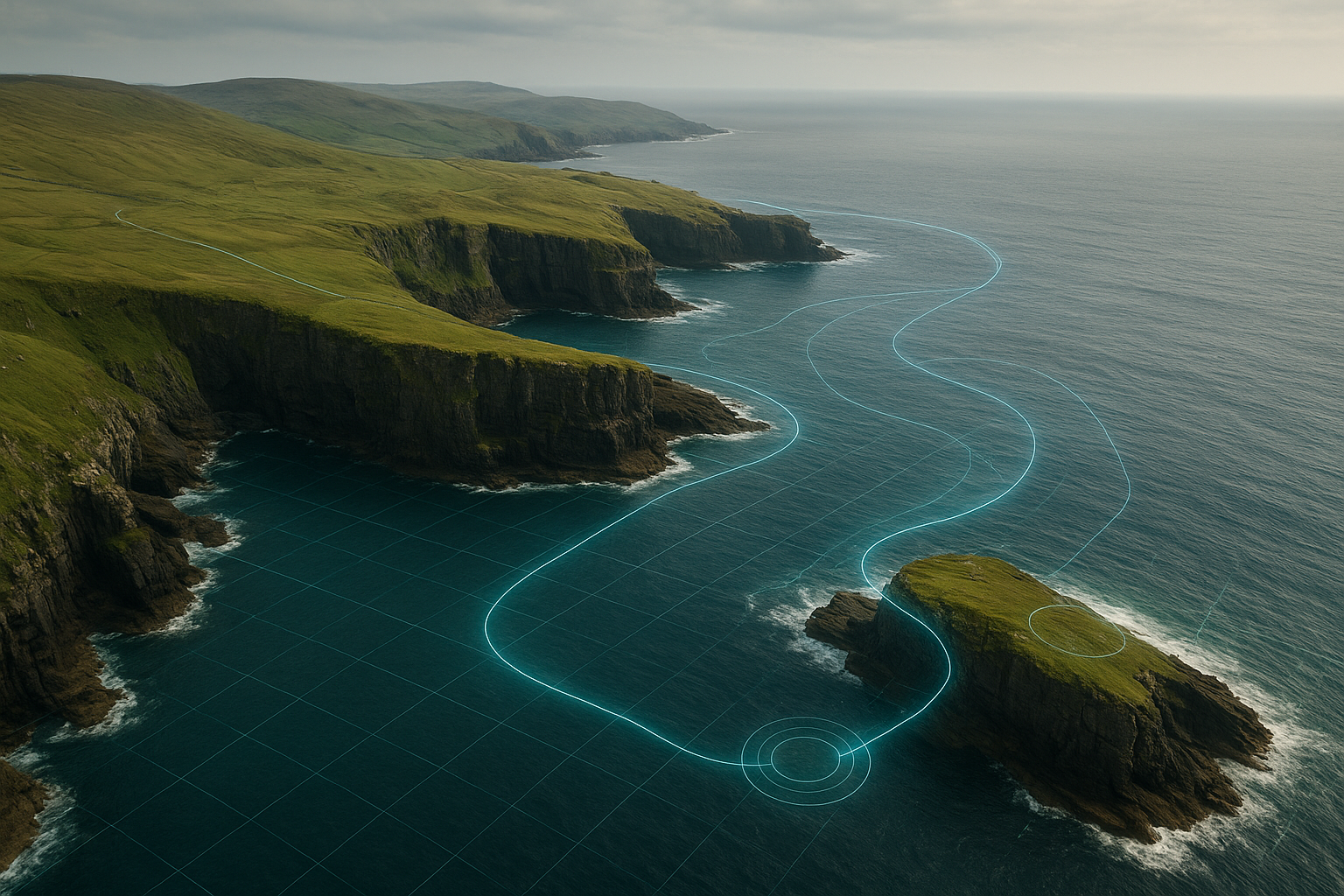
Ireland’s renewable future may be hiding in plain sight – drifting along tide lines, coating harbour walls, and flourishing in nutrient-rich Atlantic waters. As the global race for next-generation sustainable fuels accelerates, algae power is emerging as one of the most promising blue-energy sources, with research advancing rapidly from university labs to commercial trials.
Ireland, with more than 7,500 km of coastline and strong roots in aquaculture, is uniquely positioned to lead this shift. And as waste-to-resource innovation becomes central to national climate goals, businesses of all sizes – including construction, farming, hospitality and waste management – are increasingly seeking ways to reduce environmental impact while supporting the circular economy.
For more information on the circular economy in Ireland, take a look at our article: Why Recycling Matters: Ireland’s Waste Targets Explained.
What Makes Algae a Powerful Renewable Energy Source?
Algae has become a global research priority – not only for fuel, but also for its ability to capture carbon, generate energy, and create valuable bioproducts. According to the University of Cambridge, scientists have even created a biological photovoltaic cell powered entirely by algae, producing sustained electricity for more than a year without maintenance.
Meanwhile, international studies highlight algae’s unique advantages:
- Extremely fast growth – up to 10x faster than terrestrial crops
- High lipid content, ideal for biofuel production
- No competition for agricultural land
- Natural CO2 absorption, supporting climate-mitigation strategies
- Potential use in bioethanol, biodiesel, jet fuel, fertilisers, and bioplastics
Research compiled by E-RAY and other climate-science organisations shows algae can absorb more CO2 than trees, making it a high-value tool for carbon reduction – particularly for coastal countries like Ireland.
Why Ireland’s Coastlines Give It a Competitive Edge
Ireland is better placed than most nations to leverage algae-based energy and bioproducts thanks to:
-
An Abundant, Untapped Marine Resource
Ireland’s 7,500+ km coastline is one of the largest in Europe relative to land size, offering vast areas for sustainable algae cultivation.
-
Nutrient-Rich Atlantic Waters
The West Coast – from Mayo to Galway – has ideal environmental conditions for macroalgae (seaweed) and microalgae growth.
-
A Strong Aquaculture Sector
Decades of commercial seaweed harvesting, oysters, and mussel farming provide a skilled workforce and existing maritime infrastructure.
-
Government Support for the Blue Economy
Ireland’s emphasis on offshore renewables and marine innovation means algae aligns naturally with national energy ambitions.
These factors also make algae cultivation a potential circular-economy partner for Ireland’s waste sector – including opportunities to integrate waste heat, organic waste streams, or wastewater nutrients into algae-growth systems.
From Biofuel to Bioplastics: Where Algae Could Transform Irish Industry
Algae isn’t simply about fuel – it’s a foundation for a next-generation bioeconomy.
Biofuels & Aviation Fuel
Studies from Australia and the EU show algae-derived oils can be refined into biodiesel and even sustainable aviation fuel. Research teams have already created prototype algae batteries, proving its potential extends far beyond traditional energy.
Bioplastics & Packaging
Algae-based polymers offer a biodegradable alternative to petroleum plastics – critical as Ireland works toward EU packaging-waste reduction targets.
Fertilisers & Soil Supplements
Irish farmers have used seaweed for centuries, but modern processing could turn algae into high-value, low-impact fertilisers.
Animal & Aquaculture Feed
High-protein microalgae could support Ireland’s dairy, beef, and aquaculture industries while reducing reliance on imported feeds.
Grid-Support Technologies
Recent research highlighted by the BBC shows algae-powered devices capable of generating small but sustained electrical output – paving the way for low-power grid-support systems or remote environmental sensors.
To learn more about the latest innovations that empower us in Ireland’s battle for sustainability, take a look at more of our articles here.
The Challenges: Cost, Scale & Environmental Considerations
Algae’s potential is enormous – but so are the practical barriers.
High Production Costs
Energy inputs, nutrient supply, and harvesting technologies remain costly compared with wind or solar.
Scaling Cultivation Responsibly
Large-scale algae farms must avoid shading coastal habitats, altering nutrient cycles, or affecting biodiversity.
Commercial Uncertainty
Many international pilot projects have struggled to reach economic viability – though EU-funded programmes, including Harnessing Algae Power for a Sustainable Future, continue to push progress across the Atlantic region.
Still, algae remains one of the most promising renewable-fuel candidates because of its versatility and capacity for integrated waste-resource use – a key advantage for circular-economy planning in Ireland.
Other progress in renewable fuels can be seen in energy storage – take a look at our article on Battery Breakthroughs.
The Circular Opportunity: Waste Meets Marine Innovation
One of algae’s greatest opportunities lies in integrated systems, where algae consumes waste nutrients from:
- wastewater treatment
- agricultural runoff
- food-processing by-products
- organic waste streams
This reduces pollution while creating high-value biomass.
As Irish businesses aim to lower their waste output, services such as hireaskiponline.ie support a cleaner, more accountable waste lifecycle – essential for ESG reporting, public procurement, and sustainable operations.
Summary
Ireland’s coastline is more than a natural treasure – it’s a potential powerhouse. Algae could become a cornerstone of the country’s renewable-energy strategy, producing fuels, bioplastics, fertilisers and bio-products while supporting the circular economy.
Significant challenges remain, particularly in scaling production – but with strong marine assets, government backing, and growing research momentum, Ireland is exceptionally well positioned to seize the blue-energy opportunity.
A future where part of Ireland’s energy grid is powered by the sea may be closer than we think.
FAQs
Q: Why is algae considered a promising renewable energy source?
Algae grows rapidly, absorbs CO2 produces high levels of oil suitable for biofuels, and does not compete with agricultural land.
Q: What advantages does Ireland have for algae energy production?
A long coastline, ideal marine conditions, strong aquaculture expertise, and government interest in expanding the blue economy.
Q: Is algae power commercially viable yet?
Not fully. Costs remain high, but EU projects and emerging technologies are rapidly improving economic feasibility.
Q: What can algae be used for besides fuel?
Bioplastics, fertilisers, animal feed, aviation fuel, chemicals, and even low-power electricity generation.
Q: How does this relate to waste management?
Algae can integrate with waste nutrient streams, and businesses working to improve sustainability often begin by optimising waste disposal – something hireaskiponline.ie supports nationwide.

