

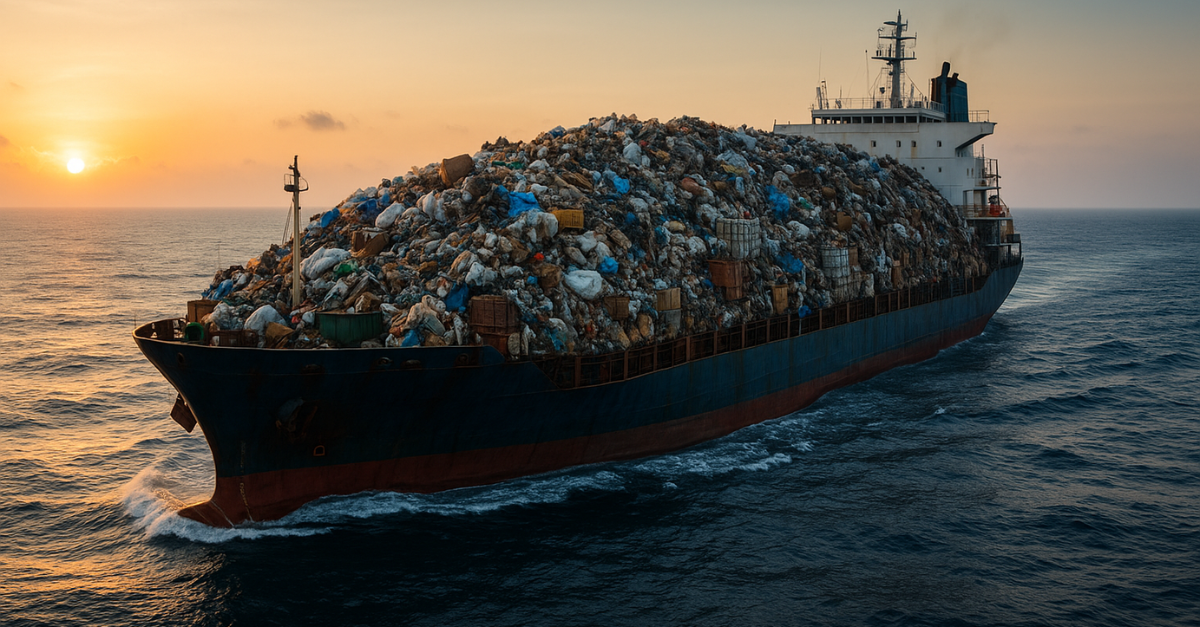
 Ireland is admired for its green landscapes – yet behind the scenes, a less-discussed reality persists: Ireland continues to ship significant volumes of waste overseas for processing. In 2023, Ireland exported 42% of its municipal waste – 1.2 million tonnes – up from 39% in 2022. From recyclables to residual waste, the country still relies heavily on international facilities to deal with what we throw away.
For households, businesses, and construction firms, this raises a difficult question: Why can’t Ireland process all its own waste?
The answer lies in capacity constraints, economics, policy gaps, and global recycling market pressures.
Proper waste segregation at home and on-site can dramatically reduce exported waste. Services like hireaskiponline.ie’s skip hire and waste removals help customers manage waste responsibly and keep more materials in Ireland’s recycling loop.
Ireland’s Waste Export Problem: How Big Is It?
Ireland generates millions of tonnes of waste annually, but domestic infrastructure is insufficient for full processing.
Recycling exports
- According to the Environmental Protection Agency (EPA), Ireland exports around two-thirds of its recyclable plastic due to limited domestic reprocessing capacity.
Residual waste exports
- Ireland also ships almost 382,000 tonnes of residual waste for incineration or recovery abroad each year, particularly to EU countries with surplus Waste-to-Energy capacity such as the Netherlands. Some of this waste also ends up in the Far East. The Irish Times states that Ireland is ‘overly-reliant’ on waste exports.
Why exporting persists
- Ireland has no large-scale plastic reprocessing industry comparable to other EU states.
- Domestic facilities for paper, cardboard, and mixed recyclables remain limited.
- High capital investment requirements slow infrastructure expansion.
In short: Ireland creates more waste than its own systems can currently handle.
Why Ireland Still Sends Waste Abroad
 Limited Recycling and Processing Facilities
Ireland’s waste management system has improved dramatically in the last decade – but it still does not have the infrastructure to recycle many waste streams domestically.
Key constraints include:
- Insufficient plastic reprocessing plants
- Dependence on private operators rather than state-run facilities
- Limited Waste-to-Energy capacity (one major incinerator in Dublin)
The Irish Examiner reports that infrastructural gaps remain a major barrier to reducing exports and achieving circular economy goals.
Economic Pressures and Global Market Volatility
After China’s 2018 National Sword policy, which severely restricted recyclable imports, the global recycling market was upended. Many countries, including Ireland, struggled to find affordable outlets for low-quality plastics and mixed recyclables.
Key impacts:
- Processing costs increased dramatically
- Countries with stronger domestic recycling industries (e.g., Germany, Netherlands) became Ireland’s main export destinations
- Operators must choose the cheapest compliant path, which often still means exporting
The European Commission continues to highlight how small economies face cost disadvantages in building broad recycling infrastructure.
High Contamination Rates
Contamination – incorrect items in recycling bins – undermines Ireland’s ability to process waste locally.
- The EPA has repeatedly identified contamination as a major driver of rejected loads.
- Contaminated materials are more likely to be exported because they require specialised processing that Ireland lacks.
Improving household segregation is one of the quickest ways to reduce waste exports. Businesses can also adopt better segregation practices by using services such as hireaskiponline.ie’s commercial skip hire and recycling guidance.
Strong EU Waste-to-Energy Markets
Countries like:
- Sweden
- Denmark
- Germany
- The Netherlands
have surplus Waste-to-Energy (WTE) capacity, allowing them to import waste for energy production. Ireland, by contrast, has limited WTE infrastructure.
This makes exporting residual waste economically attractive – even as Ireland aims to minimise waste-to-energy long term.
The Environmental Catch-22
Ireland’s waste exports are not inherently illegal or unsafe – they are heavily regulated under EU law. But they do create environmental challenges:
Transport emissions
Shipping waste across Europe increases transport-related emissions.
Loss of circular value
Once recyclables leave the country, Ireland misses the opportunity to:
- Create jobs in reprocessing
- Develop industries around recycled materials
- Keep materials within domestic circular loops
The European Environment Agency stresses that circular value is maximised when materials are recycled as close as possible to their point of origin.
Dependency on foreign markets
If Europe’s major waste-importing countries tighten policies, Ireland could face:
- Stockpiling
- Rising domestic costs
- Urgent need for new infrastructure.
What Needs to Change for Ireland to Process More Waste at Home?
Expanded Domestic Recycling Plants
Targets in Ireland’s Circular Economy Strategy call for:
- New plastic reprocessing facilities
- Increased capacity for paper, metals, and organics
- Investments in advanced sorting technology
These will require strong public-private partnerships.
 Improved Household Segregation
Better sorting at home can dramatically reduce contamination – a major barrier to domestic recycling.
Public awareness campaigns and improved bin labelling (already planned by the Irish Government) could help reduce rejected loads.
Strategic Investment in Waste-to-Energy
While controversial, Ireland may need:
- Additional regional facilities
- Strict emissions controls
- Integration with district heating (as used in Scandinavia)
Building Circular Economy Markets
Ireland must support industries that use recycled materials, not just collect them.
Examples include:
- Recycled plastics in construction products
- Paperboard manufacturing
- Secondary raw material markets for metals and glass
For more information on the best methods of waste disposal, take a look at our article: The Hierarchy of Waste: Waste Management Practices Explained.
The Bottom Line: Is Change Coming?
Ireland has ambitious targets to reduce waste exports, driven by:
- The Circular Economy and Miscellaneous Provisions Act
- EU recycling and landfill directives
- Public pressure for domestic accountability
But until more infrastructure is built, significant volumes of waste will continue to leave Irish shores.
Waste exports are a symptom – not the cause – of a system that must modernise. Ireland is capable of building a genuinely circular economy, but it requires:
- Investment
- Policy leadership
- Public participation
- Industry innovation
Summary
Ireland still exports a large proportion of its waste because the country lacks adequate recycling and processing infrastructure. Limited facilities, economic pressures, contamination, and strong EU Waste-to-Energy markets all contribute to continued reliance on overseas processing. While exports are legally compliant and sometimes environmentally justified, they also mean lost value and ongoing dependency on foreign markets. Long-term solutions require modernisation, investment, and better segregation – from households to businesses.
FAQs
Is it legal for Ireland to export waste?
Yes. Waste exports are regulated under EU Waste Shipment Regulations and must meet strict environmental and traceability standards.
Which countries receive most of Ireland’s exported waste?
Primarily EU members such as Germany, the Netherlands, and Belgium, which have large recycling and Waste-to-Energy capacities.
What kind of waste does Ireland export?
Ireland exports:
- Plastics
- Paper and cardboard
- Metals
- Residual waste for energy recovery
How can households help reduce waste exports?
Proper segregation and reducing contamination are key. Using responsible waste services – including skip hire for renovations or clear-outs – ensures materials enter compliant recycling streams.
Will Ireland ever stop exporting waste?
Completely eliminating waste exports is unlikely soon, but Ireland aims to significantly reduce export volumes through expanded infrastructure and circular economy initiatives.

