

Why Roofing Is Changing
The roofing industry is undergoing a major transformation. Clients increasingly demand greener buildings, regulations are tightening, and costs are rising – both for labour and materials. At the same time, construction and demolition (C&D) waste in Ireland remains huge: in 2023 the EPA reported that the sector produced approximately 9 million tonnes, with concrete, brick, tile, and gypsum waste among the major contributors.
Roofers today can no longer think only about tiles or membranes – they must also consider how materials are designed, installed, and disposed of sustainably. That’s where material innovation meets smart waste management. When you partner with hireaskiponline.ie, you can plan your skip usage proactively, helping you stay compliant and efficient on clean-up, recycling, and costs.
What’s Driving the Shift in Roofing Today?
Several powerful forces are pushing roofing toward a more sustainable, tech-driven future:
- Technology: Drones, sensors, and smart materials are becoming standard in modern construction.
- Sustainability: Green roofs, recycled materials, and low-carbon products are now expected by clients, rather than being ‘nice to have’.
- Regulation: Net-zero goals and evolving EU/Irish energy standards demand better insulation, lower embodied carbon, and improved waste recovery.
To read more about Ireland’s national and European waste targets, take a look at our article here.
For Irish roofers, this translates into three critical questions:
- Which sustainable materials will maintain performance and cost-effectiveness long term?
- How can you quantify and report environmental performance (for clients, regulators, or ESG frameworks)?
- Can your waste-management processes support proper segregation, recycling, and traceability?
Smarter Roofing Materials: What’s Emerging?
Green Roofs & Bio-Solar Systems
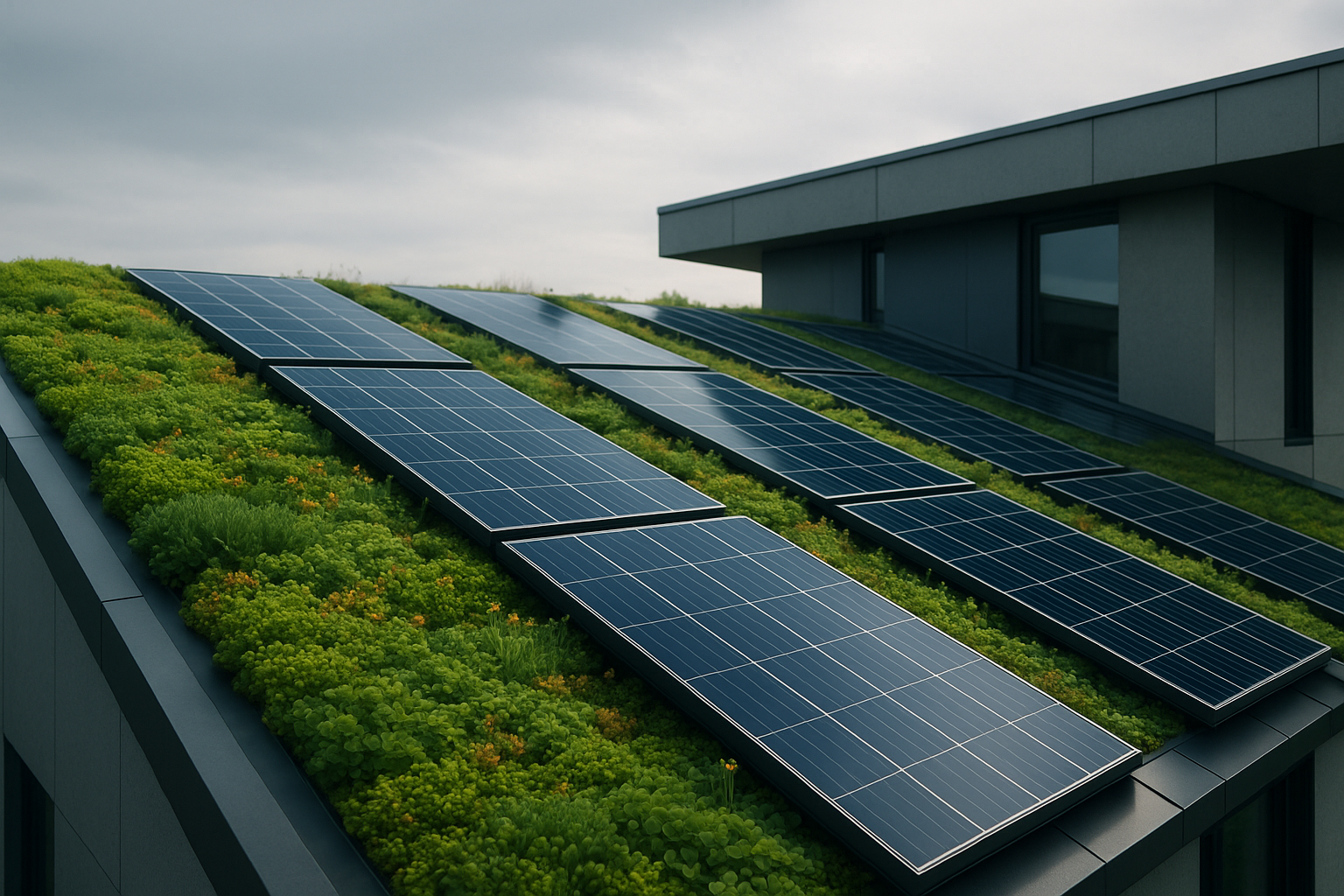
Green roofs – from sedum mats to biodiverse wildflower systems – are now more than decorative. They improve thermal and acoustic performance, reduce stormwater runoff, and create urban pollinator habitats.
The next frontier? Bio-solar roofs, combining vegetation and photovoltaic (PV) panels. The greenery provides a natural cooling effect for the solar cells, increasing efficiency, while panels shade the plants – a symbiotic, energy-positive setup.
Integrated Solar Tiles
Solar technology is also becoming architectural. Instead of traditional bolt-on arrays, PV roof tiles and shingles are built directly into the roofing material, turning whole roofs into power-generating surfaces that still look like a normal pitched roof.
For roofers, this means more coordination with electrical teams, careful installation, and responsible disposal of old tiles.
 When it’s time to strip out old material, managing that waste correctly becomes critical – and that’s where professional skip-hire and waste removal planning comes in.
Cool Roofs & Self-Healing Membranes
Reflective “cool” roofing membranes or coatings are gaining traction, especially for flat or industrial roofs. These materials reflect more sunlight and absorb less heat, which reduces energy demand and helps mitigate the urban heat island effect.
On top of that, self-healing membranes are emerging – polymer coatings that can seal minor punctures and cracks, significantly extending the roof’s life and reducing waste.
Meanwhile, advanced single-ply systems like TPO or reinforced polymers offer superior weather and UV resistance, better weldability, and lower long-term maintenance needs. The result? Fewer full roof strip-outs and less demolition waste.
Smart Tech on Roofs: Drones, Sensors & Monitoring
It’s not just the materials that are “getting smarter” – how we inspect, maintain, and predict failure is changing too.
Drones &Â Thermal Imaging
Many roofers are already using drones to survey roof surfaces quickly and safely. Combined with thermal imaging, this helps identify heat loss, moisture ingress, or insulation gaps – without traditional scaffolding.
IoT Sensors
On larger commercial or institutional roofs, Internet of Things (IoT) sensors embedded in the roofing layers can continuously monitor moisture, structural loads, or temperature. This data enables predictive maintenance – meaning fewer reactive repairs and more efficient resource use.
But these smart systems also bring complexity: when sensors or components reach the end of life, they introduce electrical waste that needs to be disposed of or recycled carefully, rather than simply tossed in a mixed waste skip.
Roofing Waste & the Circular Economy
Even as Ireland’s recycling infrastructure improves, construction and demolition waste remains a significant challenge. According to the EPA, in 2023 Ireland generated around 9 million tonnes of C&D waste. While a robust 73% of non-hazardous C&D waste was recovered through recycling or backfilling, the volumes are still massive.
Roofing contributes substantially to this: old tiles, insulation boards, offcuts, packaging, timber – all must be managed carefully. As the EPA notes, despite recovery efforts, much of this waste remains in backfill or low-value use.
For roofers, this isn’t just a regulatory headache – it’s a business opportunity. Those who deliver auditable waste-management practices, invest in segregation, and partner with reliable skip providers stand out. Working with hireaskiponline.ie means you can plan skips for specific waste streams (e.g., old tiles, insulation, mixed C&D) rather than relying on mixed disposal.
To learn more about sustainable waste management practices, take a look at our article: The Hierarchy of Waste.
Practical Recommendations for Forward-Looking Roofers
Here are four actionable steps for roofing contractors who want to build sustainably and efficiently:
- Specify with End-of-Life in Mind
Choose materials that are recyclable (metal, single-ply membranes) or long-lasting and consider future upgrades like PV tiles or green roofs. - Plan Your Waste from Day One
Estimate the types and volumes of waste you’ll generate (tiles, insulation, packaging) and book skips accordingly. Use appropriate skips for segregation where possible. - Measure & Communicate Your Impact
Track waste volumes, recycling rates, and carbon savings. These metrics can be shared with clients or included in tender submissions for ESG-driven projects. - Partner with Knowledgeable Waste Providers
Work with skip-hire partners (like hireaskiponline.ie) who understand your industry. Choose providers who facilitate recycling, offer separate containers, and support circular-economy practices.
Taking these steps doesn’t just make your projects cleaner and more efficient – it also gives eco-conscious clients real peace of mind. As ESG requirements become increasingly embedded in public tenders, commercial frameworks, and large-scale development projects, roofing contractors who can demonstrate responsible material choices and transparent waste-management processes stand out immediately.
Summary
- Roofing is evolving fast: greener materials, smarter tech, and circular-economy principles are now key.
- New materials like green roofs, solar tiles, cool membranes, and self-healing coatings are becoming mainstream.
- Drones, thermal imaging, and IoT sensors are helping roofers inspect and maintain roofs more efficiently.
- Construction and roofing waste is a major part of Ireland’s 9 million-tonne C&D stream – but recovery rates are improving.
- Roofers who integrate waste planning, recycling, and data-driven reporting – with help from trusted skip-hire partners – will be best positioned for future growth.
FAQs
Q: What types of roofing materials are becoming more sustainable in the near future?
A: Expect more green roofs, bio-solar systems, integrated PV tiles, cool membranes, and self-healing materials – all designed to last longer and generate less waste.
Q: How can roofers use drones and sensors on site?
A: Drones provide fast, safe visual and thermal inspection. IoT sensors can monitor moisture, temperature, and structure, enabling predictive maintenance.
Q: Why does roofing waste matter in Ireland’s circular economy?
A: Roofing contributes significantly to construction and demolition (C&D) waste. Proper segregation and recycling support circular economy goals and reduce landfill reliance.
Q: How does hireaskiponline.ie help roofing contractors with waste management?
A: We offer tailored skip-hire solutions, help you book the right types of skips, and support recycling and reporting to align with environmental and ESG standards.

