

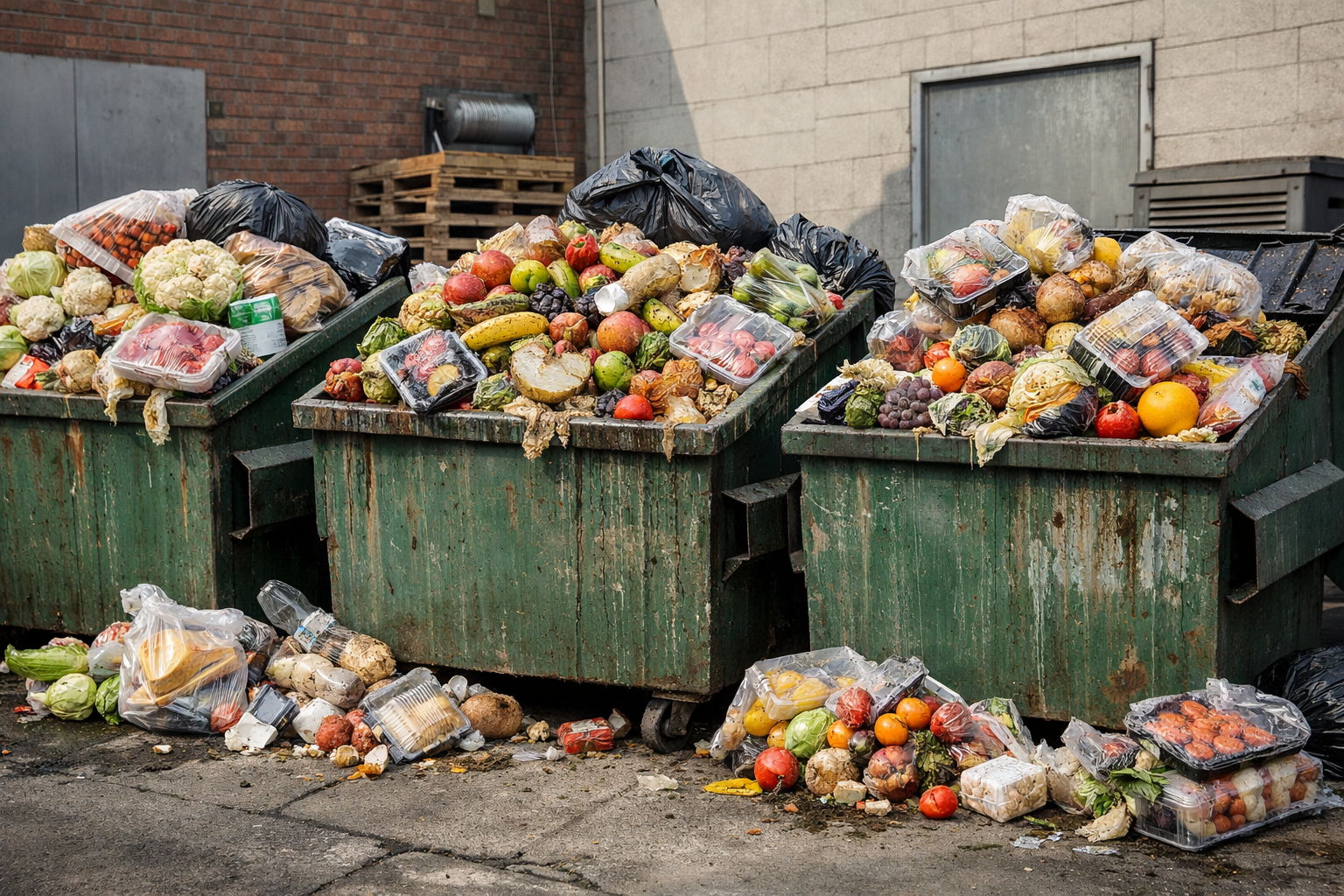
Food waste is one of the easiest environmental problems to tackle and yet it remains one of Ireland’s biggest environmental challenges. The Environmental Protection Agency (EPA) reports that 830,000 tonnes of food waste were generated in 2023. By reducing avoidable food waste at home, households can save money while helping to cut emissions and support a more circular economy. Reducing food waste saves money, lowers greenhouse gas emissions and helps protect valuable natural resources. Small changes in the kitchen can make a surprisingly big difference.
If you’re interested in the wider reasons behind waste habits, read our article on The Psychology of Waste: Why Ireland Still Struggles to Recycle Properly, which explores why changing everyday behaviours is often more difficult than we think.
Why Food Waste Matters
Food waste isn’t just about throwing leftovers into the bin. Every wasted meal represents the water, energy, land and labour used to produce, transport and prepare it. When food ends up in landfill, it breaks down without oxygen and produces methane, a greenhouse gas far more potent than carbon dioxide over the short term.
According to the EPA, food waste occurs throughout the supply chain, but households remain one of the largest contributors. Preventing waste at home is one of the most effective ways individuals can support Ireland’s transition towards a circular economy. Reducing food waste also benefits your wallet. The EPA estimates that the average household could save hundreds of euro each year simply by buying only what they need and making better use of the food they already have.
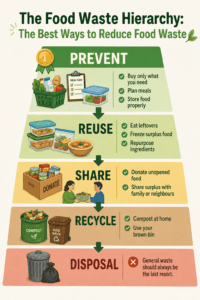
Preventing food waste should always be the first priority. However, some food waste is unavoidable. Vegetable peelings, eggshells and coffee grounds will always exist. That’s why researchers are also developing smarter ways to recover value from unavoidable food waste, including composting, anaerobic digestion and even insect-based recycling technologies. Read our guide on these latest innovations here.
Plan Before You Shop
Most food waste begins before you even reach the supermarket. Creating a meal plan for the week helps you buy with purpose rather than impulse. Before shopping, check your cupboards, fridge and freezer to avoid buying duplicates. A simple shopping list can prevent unnecessary purchases and reduce the temptation to buy products that may never be used. Bulk offers can sometimes provide excellent value, but only if you genuinely expect to use everything before it spoils. If not, the cheapest option may actually become the most expensive.
The EPA’s Stop Food Waste campaign recommends planning meals around ingredients you already have before buying anything new. This simple habit reduces waste while making grocery shopping quicker and more efficient.
Understand Food Labels
Many perfectly edible foods are thrown away because food labels are misunderstood. A “Use By” date relates to food safety. Products should not be eaten after this date. A “Best Before” date refers to quality rather than safety. Many foods remain perfectly safe to eat after the best before date if they have been stored correctly and show no signs of spoilage. Understanding this difference can prevent unnecessary waste without compromising food safety. The Food Safety Authority of Ireland (FSAI) and StopFoodWaste both encourage consumers to learn the difference between these labels before throwing food away.
Store Food Properly
Correct storage dramatically extends the life of fresh food. Fruit and vegetables often have different storage requirements. Some produce keeps better in the fridge, while others lose flavour when chilled. Bread freezes well and can be toasted directly from frozen, helping households avoid mouldy loaves. Using airtight containers for leftovers helps meals stay fresh for longer and makes them easier to reuse. A useful habit is to move older food to the front of the fridge and place newer purchases behind it. This simple “first in, first out” approach makes forgotten ingredients much less likely.
Make the Most of Leftovers
Leftovers should be viewed as tomorrow’s meal rather than yesterday’s waste. Cooked vegetables can become soup, curry or pasta sauce. Roast chicken can be used in sandwiches or salads. Stale bread works well for breadcrumbs, croutons or bread pudding.
Many meals also freeze exceptionally well. Labelling containers with the date helps ensure they’re used before quality declines. Creative cooking reduces waste while saving both time and money throughout the week.
Compost What You Can’t Eat
Not every food item can be avoided. Vegetable peelings, eggshells, tea bags and coffee grounds can often be composted instead of being sent to landfill. Where home composting isn’t practical, Ireland’s brown bin collections provide an environmentally responsible alternative for food waste. Using food waste recycling helps recover valuable nutrients while reducing methane emissions from landfill. MyWaste provides clear guidance on what can and cannot be placed in your brown bin.
Home composting has also become easier in recent years. Compact compost bins and wormeries allow households with limited outdoor space to recycle kitchen scraps into nutrient-rich compost. These systems reduce the amount of organic waste entering Ireland’s waste collection system while creating a valuable resource for gardens.
Food waste is only one part of responsible waste management. If you’re tackling a kitchen renovation, garden clearance or larger home project, our Skip Size Calculator can help you choose the right skip without paying for more capacity than you need.
Technology Can Help Reduce Waste
Technology is beginning to play an increasingly important role in reducing waste across society. Many households now use meal planning apps, digital shopping lists and food inventory tools to monitor expiry dates and reduce unnecessary purchases. Smart fridges and inventory systems are also becoming more common, helping families keep track of what they already own. Artificial intelligence is also improving food production, logistics and supply chain management by helping businesses predict demand more accurately and reduce surplus food before it becomes waste.
You can learn more about these emerging technologies in our article on AI and Environmental Science: Tackling Climate Change Together.
Small Habits Create Lasting Change
Reducing food waste doesn’t require dramatic lifestyle changes.
Simple habits often have the biggest impact:
- Plan meals before shopping.
- Buy only what you need.
- Understand food date labels.
- Store food correctly.
- Freeze surplus food.
- Use leftovers creatively.
- Compost unavoidable food waste.
When millions of households make small improvements, the environmental benefits become significant.
Managing More Than Just Food Waste?
Reducing food waste is one of the simplest ways to lessen your environmental impact, but larger projects often create other types of household waste too. If you’re clearing out a home, renovating a kitchen or landscaping a garden, HireASkipOnline makes it easy to compare skip sizes, book online and dispose of waste responsibly across Ireland.
Summary
Reducing food waste is one of the simplest ways to save money while protecting the environment. Planning meals, storing food properly and understanding food labels can dramatically reduce the amount of edible food thrown away each week. Any unavoidable food waste should be composted or placed in the brown bin wherever possible. Small changes today support a cleaner, more sustainable Ireland tomorrow.
Frequently Asked Questions
What is the best way to reduce food waste?
Planning meals, shopping with a list and using leftovers are among the most effective ways to reduce food waste.
Can I eat food after its best before date?
In many cases, yes. A best before date relates to quality rather than safety. Always check the food looks and smells normal before eating. Never consume food after its use by date.
Should food waste go into the general waste bin?
No. Where available, food waste should be composted or placed in your brown bin instead of your general waste bin.
How much money can reducing food waste save?
The EPA estimates that households can save hundreds of euro each year by reducing avoidable food waste through better planning, storage and meal preparation.
What should I do with food waste during a kitchen renovation?
If you’re renovating your kitchen or clearing out old cupboards, a skip can help dispose of bulky renovation waste, packaging and unwanted fixtures efficiently. Food waste should still be separated and placed in your brown bin where possible. If you’re planning a larger home improvement project, book a skip online with HireASkipOnline for a fast, reliable and fully licensed waste disposal service.

